
Why Biltong Producers Are Moving Beyond the Vacuum Pack
Biltong has gone global. What was once a padstal product is now sold in UK supermarkets, American gyms and online stores shipping worldwide — and the packaging expectations have grown with it. Modern biltong buyers want a premium, resealable stand-up pouch they can snack from, not a flat brick of meat pressed against plastic.
But every biltong maker knows the fear that comes with softer packaging: mould.

The problem with vacuum packing
Vacuum packing has been the industry default for years because it removes air. But it comes with real costs. It squashes the product flat, so beautifully sliced wet biltong arrives looking compressed and sweaty. It can’t be resealed. And crucially, it doesn’t remove all the oxygen — a small amount always remains, and more migrates through the plastic over time. For wet biltong especially, that residual oxygen is enough for mould to take hold well before the best-before date.
The result is a product that survives, but doesn’t sell itself. On a shelf next to a proud, plump stand-up pouch, a vacuum brick looks like it’s from a different decade.
The doypack + oxygen absorber combination
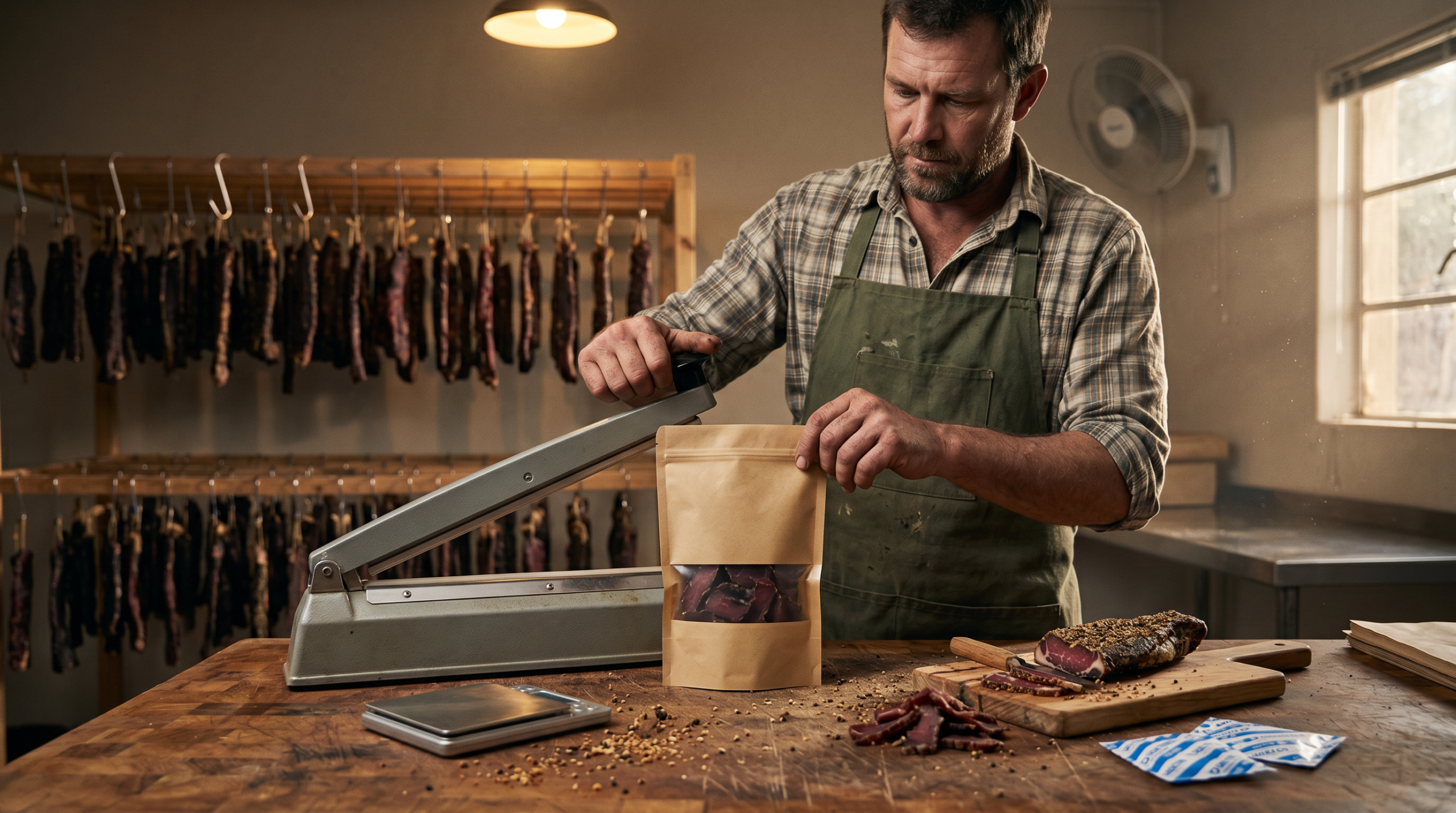
The approach winning in retail is a laminated stand-up doypack with a food-grade oxygen absorber inside. The O-Buster sachet pulls the oxygen level inside the sealed pouch down below 0.01% — lower than vacuum packing achieves — and keeps it there, absorbing any oxygen that migrates in through the film over the weeks that follow.
For biltong, the payoff is threefold. Mould is stopped at the source, because mould cannot grow without oxygen. Fat rancidity — the stale, sour taste that ruins older biltong — is halted. And the biltong itself stays loose and presentable, so the pack you sell looks like the product you made. Producers routinely see shelf life extended up to three times, opening the door to wider distribution and export without cold-chain anxiety.
What about preservatives and gas flushing?
Nitrogen gas flushing works, but the equipment is expensive and oxygen still creeps back in over time — with nothing left inside the pack to absorb it. Chemical preservatives clash with the traditional, all-natural story that sells biltong in the first place. An oxygen absorber needs no capital equipment: drop the sachet in, seal the pouch, done. It’s the simplest upgrade in the industry.
Kubepack supplies O-Buster oxygen absorbers to biltong producers across South Africa, with practical advice on the right cc rating for your pouch size and moisture level. Wet or dry, sliced or sticks — we’ll help you keep it perfect.