
The Clean-Label Dilemma: Longer Shelf Life Without Preservatives
Walk down any supermarket aisle in South Africa today and you’ll see the same story on every shelf: “no preservatives”, “all natural”, “nothing artificial”. Shoppers have learnt to read labels, and they’re voting with their wallets. Globally, the clean-label movement has become one of the strongest forces in food, with producers under growing pressure to strip chemical preservatives out of their recipes.
There’s just one problem. Preservatives were doing a job.

The trade-off nobody talks about
Remove the preservatives from a recipe and, in most cases, you shorten its shelf life. Products go rancid sooner, mould appears earlier, colours fade faster. For a small producer, that can mean the difference between supplying a national retailer and being limited to the local weekend market — because retailers demand shelf life, and couriers and distribution add days before your product ever reaches a shelf.
Many producers respond by shrinking batch sizes, shortening best-before dates or quietly accepting higher returns and write-offs. All three eat directly into margin.
The oxygen problem
Here’s the key insight: most of what spoils food isn’t “age” — it’s oxygen. Oxygen feeds mould growth, turns fats and oils rancid, bleaches natural colours and flattens aromas. The air sealed inside your packaging carries roughly 21% oxygen, and that’s all spoilage needs to get started.
Chemical preservatives fight the symptoms of oxidation from inside the recipe. But there’s another way: remove the oxygen itself, from inside the pack.
How oxygen absorbers solve the dilemma
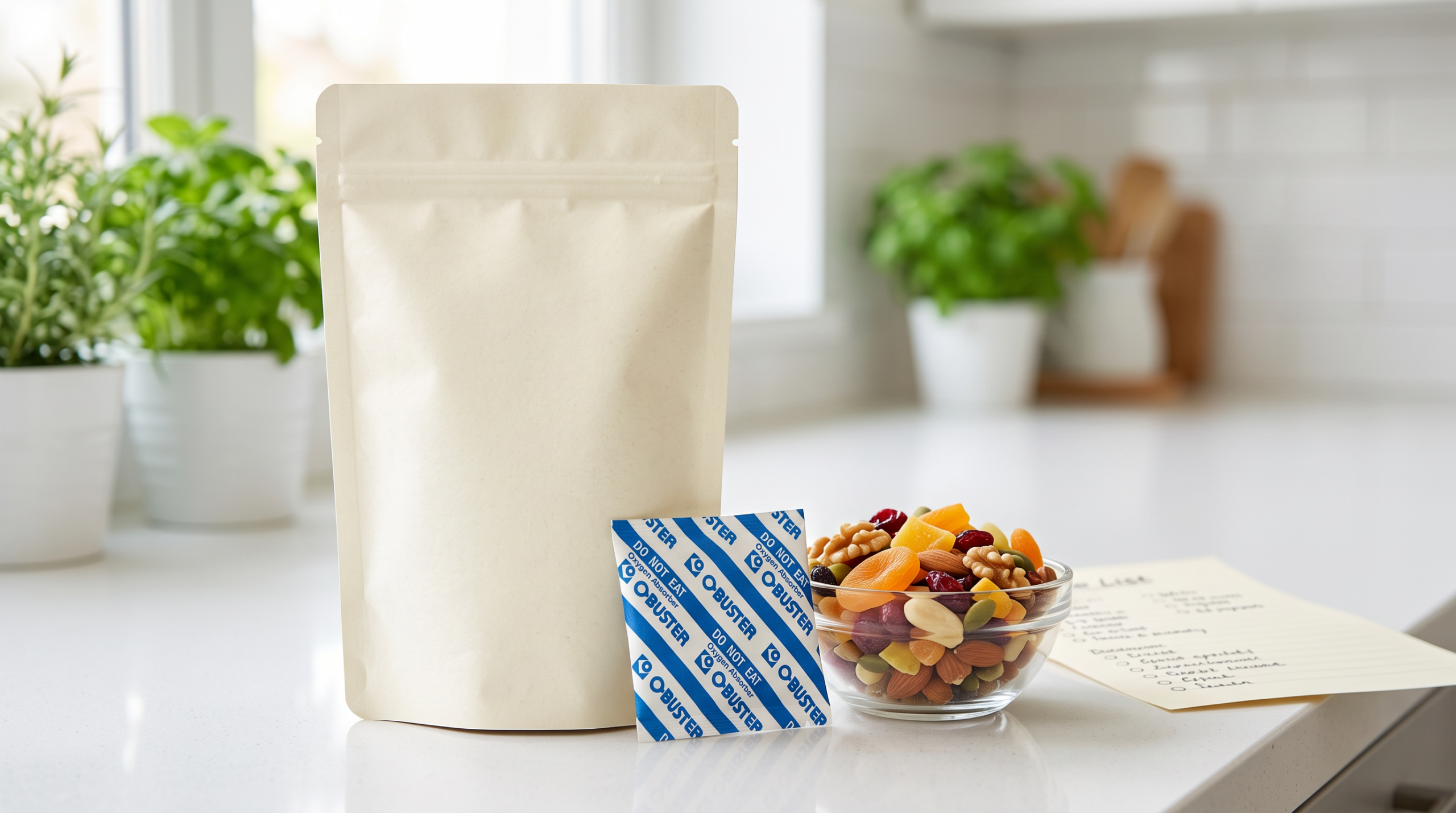
An oxygen absorber like the O-Buster is a small food-grade sachet that sits inside your sealed pack and absorbs the oxygen out of the trapped air, typically reducing it to below 0.01%. No oxygen means no mould growth, no rancidity and no oxidative fading — without changing a single ingredient in your recipe.
That’s why oxygen absorbers have become the quiet workhorse of the clean-label movement worldwide. Your label still reads exactly the way your customers want it to read. Your ingredient list stays short. But your product now stays fresh up to three times longer — long enough for national distribution, online sales and even export.
Getting it right
Two things matter in practice. First, the sachet must be correctly sized (measured in cc of oxygen absorbed) for your pack volume and product type — too small and it can’t do its job. Second, your packaging must have a decent oxygen barrier, such as a laminated stand-up pouch; an absorber can’t help in packaging that breathes. Get those two right and clean label stops being a compromise.
Kubepack supplies FDA-compliant O-Buster oxygen absorbers from local stock, with honest advice on the correct cc rating for your product and pack size. Talk to us before you shorten another best-before date.