27 – 29 October 2026

Meet KubePac at Propak Cape 2026

Cape Town International Convention Centre (CTICC)
Come see O’Buster oxygen absorbers in action.

Stand
Number
E59

Book a meeting with us

Lock in a time at the stand — message Leigh-Anne directly and she’ll confirm your slot.

Book a Meeting on WhatsApp

Leigh-Anne · 084 835 7182

logotype

27 – 29 October 2026

Meet KubePac at Propak Cape 2026

Cape Town International Convention Centre (CTICC)
Come see O’Buster oxygen absorbers in action.

Stand
Number
E59

Book a meeting with us

Lock in a time at the stand — message Leigh-Anne directly and she’ll confirm your slot.

Book a Meeting on WhatsApp

Leigh-Anne · 084 835 7182

No products in the cart.

Photorealistic_wide_hero_banne_Nano_Banana_2_41576
Biltong

Why Biltong Producers Are Moving Beyond the Vacuum Pack

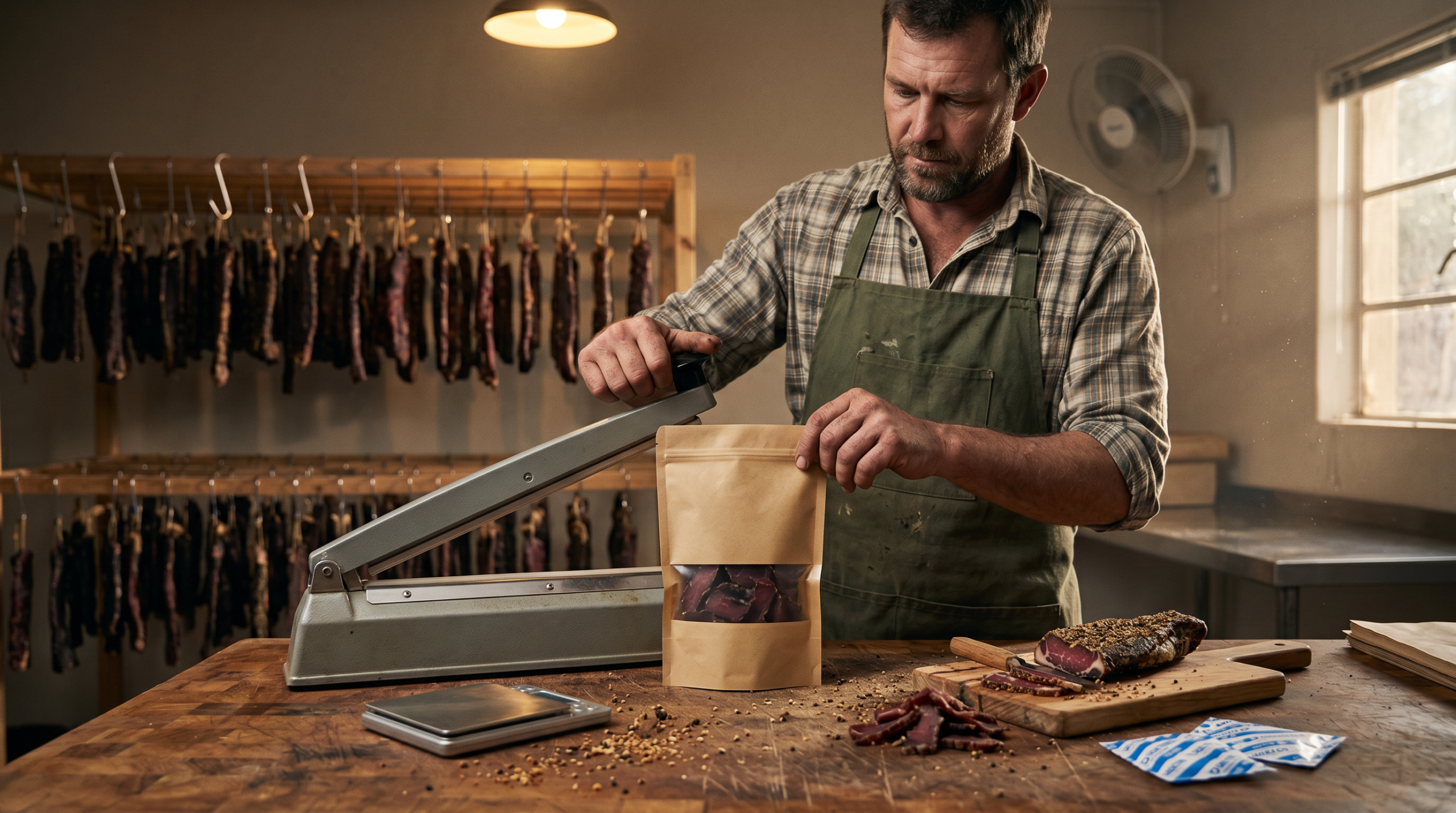
Biltong has gone global. What was once a padstal product is now sold in UK supermarkets, American gyms and online stores shipping worldwide — and the packaging expectations have grown with it. Modern biltong buyers want a premium, resealable stand-up pouch they can snack from, not a flat brick of meat pressed against plastic.

But every biltong maker knows the fear that comes with softer packaging: mould.

The problem with vacuum packing

Vacuum packing has been the industry default for years because it removes air. But it comes with real costs. It squashes the product flat, so beautifully sliced wet biltong arrives looking compressed and sweaty. It can’t be resealed. And crucially, it doesn’t remove all the oxygen — a small amount always remains, and more migrates through the plastic over time. For wet biltong especially, that residual oxygen is enough for mould to take hold well before the best-before date.

The result is a product that survives, but doesn’t sell itself. On a shelf next to a proud, plump stand-up pouch, a vacuum brick looks like it’s from a different decade.

The doypack + oxygen absorber combination

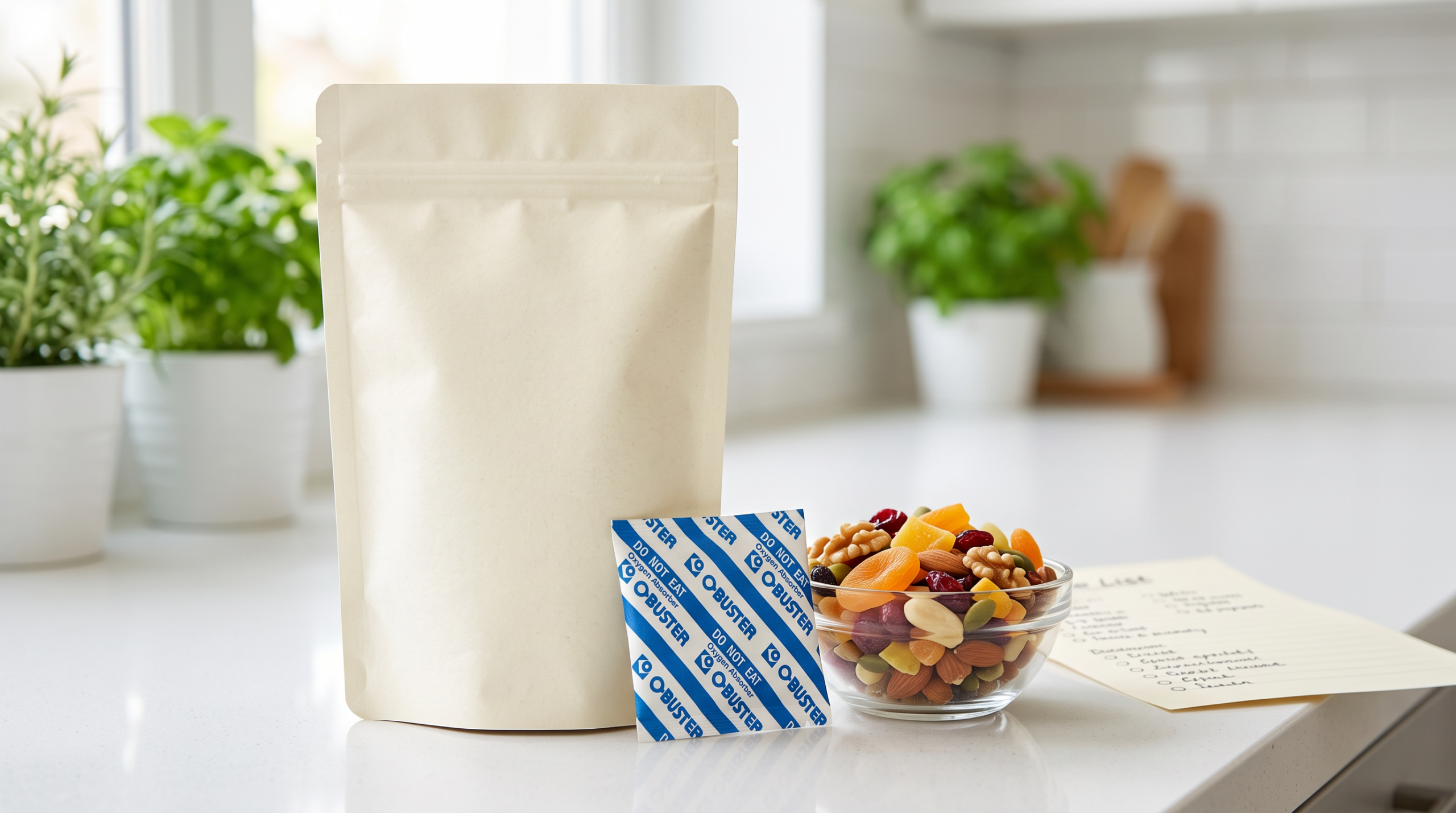
The approach winning in retail is a laminated stand-up doypack with a food-grade oxygen absorber inside. The O-Buster sachet pulls the oxygen level inside the sealed pouch down below 0.01% — lower than vacuum packing achieves — and keeps it there, absorbing any oxygen that migrates in through the film over the weeks that follow.

For biltong, the payoff is threefold. Mould is stopped at the source, because mould cannot grow without oxygen. Fat rancidity — the stale, sour taste that ruins older biltong — is halted. And the biltong itself stays loose and presentable, so the pack you sell looks like the product you made. Producers routinely see shelf life extended up to three times, opening the door to wider distribution and export without cold-chain anxiety.

What about preservatives and gas flushing?

Nitrogen gas flushing works, but the equipment is expensive and oxygen still creeps back in over time — with nothing left inside the pack to absorb it. Chemical preservatives clash with the traditional, all-natural story that sells biltong in the first place. An oxygen absorber needs no capital equipment: drop the sachet in, seal the pouch, done. It’s the simplest upgrade in the industry.

Kubepack supplies O-Buster oxygen absorbers to biltong producers across South Africa, with practical advice on the right cc rating for your pouch size and moisture level. Wet or dry, sliced or sticks — we’ll help you keep it perfect.
Replace_the_Oxygen_Absorber_wi_Nano_Banana_2_05008
Pet Treats

Mould, Recalls and Reputations: The Hidden Risk in Natural Pet Treats

The pet treat market has never been hotter — or more demanding. Pet parents now read treat labels the way they read their own food labels, and “natural, preservative-free” has become the price of entry. Air-dried ostrich chews, dehydrated liver bites, single-ingredient biltong for dogs: this is what modern pet owners are buying.

It’s also what keeps producers up at night. Because a natural, high-fat, meaty treat with no preservatives is one of the most spoilage-prone products you can put in a pouch

When freshness fails, it fails publicly

Internationally, pet food recalls remain a constant drumbeat, and mould and pathogen contamination feature prominently among the causes. For a small brand, a single batch of mouldy treats doesn’t just mean a refund — it means photos in a Facebook group, a one-star review that never disappears, and a retailer who quietly stops re-ordering. Pet owners forgive very little when their animal’s health is involved.

The frustrating part? Most of these failures trace back to the same invisible culprit: oxygen sealed inside the pack.

Why oxygen is the enemy of natural treats

Oxygen does three kinds of damage to a meaty treat. It lets mould grow, especially in air-dried products that retain some moisture. It turns the healthy omega-rich fats rancid, destroying both nutrition and smell. And it slowly strips away the meaty aroma that makes a dog spin in circles — the single biggest driver of repeat purchases.

The fix that doesn’t touch your recipe

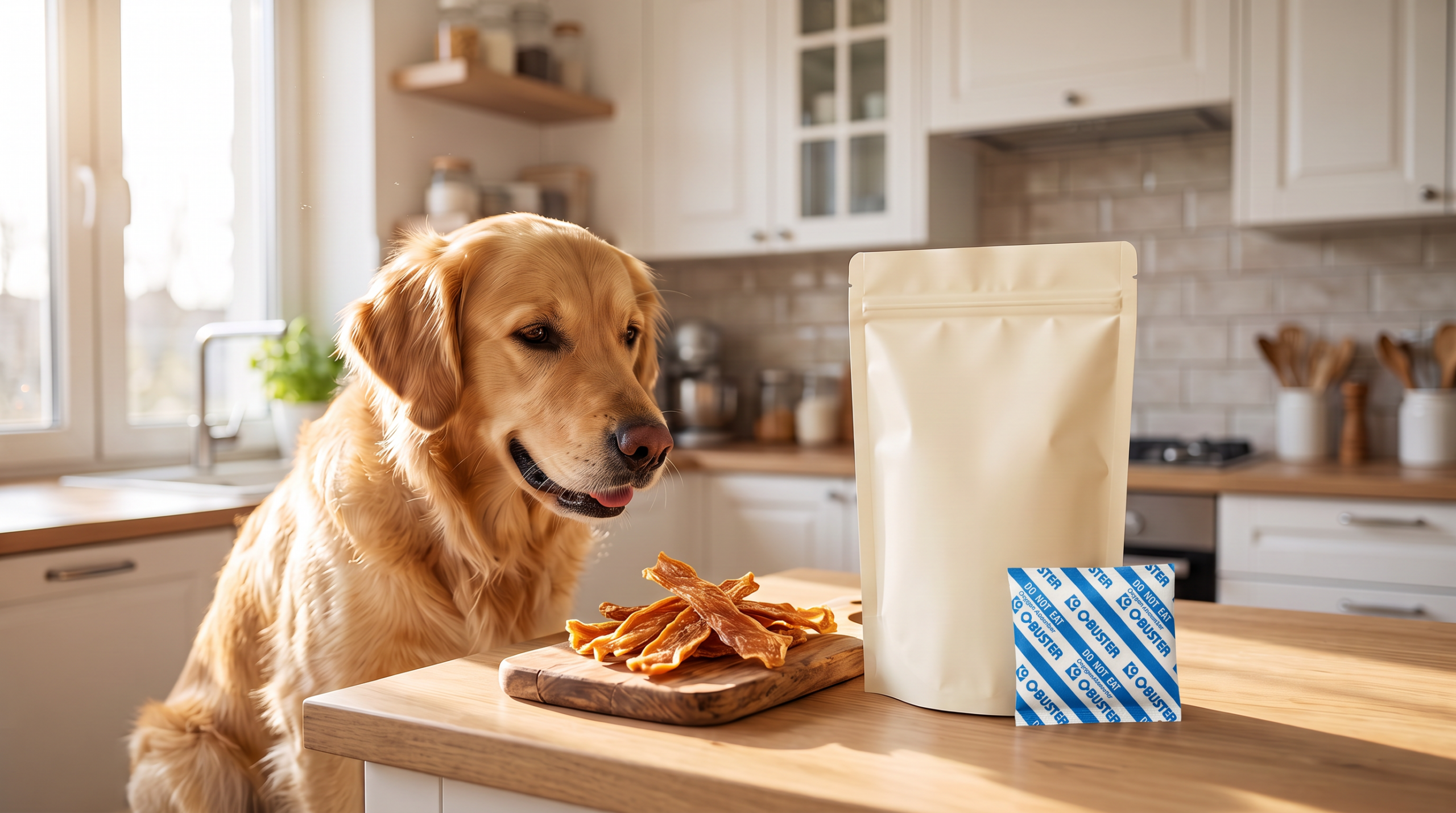
A food-grade O-Buster oxygen absorber inside each sealed pouch reduces oxygen to below 0.01% and holds it there for the life of the pack. Mould can’t grow, fats stay stable, and the aroma stays locked in until the customer opens the bag. Your recipe stays exactly as natural as your label claims — the sachet is clearly marked “Do Not Eat”, made of food-grade materials, and comes out with the packaging.

For producers, the practical wins add up fast: shelf life extended up to three times, confident online and courier sales, access to retailers who demand long dating, and a real answer for export paperwork. All from a sachet that costs cents per pack.

Kubepack supplies O-Buster oxygen absorbers to pet treat makers across South Africa, with advice on the correct sachet size for everything from thin liver crisps to thick ostrich chews. Keep tails wagging — and reviews glowing.

Photorealistic_commercial_food_Nano_Banana_2_38061
Clean-Label

The Clean-Label Dilemma: Longer Shelf Life Without Preservatives

Walk down any supermarket aisle in South Africa today and you’ll see the same story on every shelf: “no preservatives”, “all natural”, “nothing artificial”. Shoppers have learnt to read labels, and they’re voting with their wallets. Globally, the clean-label movement has become one of the strongest forces in food, with producers under growing pressure to strip chemical preservatives out of their recipes.

There’s just one problem. Preservatives were doing a job.

The trade-off nobody talks about


Remove the preservatives from a recipe and, in most cases, you shorten its shelf life. Products go rancid sooner, mould appears earlier, colours fade faster. For a small producer, that can mean the difference between supplying a national retailer and being limited to the local weekend market — because retailers demand shelf life, and couriers and distribution add days before your product ever reaches a shelf.

Many producers respond by shrinking batch sizes, shortening best-before dates or quietly accepting higher returns and write-offs. All three eat directly into margin.

The oxygen problem


Here’s the key insight: most of what spoils food isn’t “age” — it’s oxygen. Oxygen feeds mould growth, turns fats and oils rancid, bleaches natural colours and flattens aromas. The air sealed inside your packaging carries roughly 21% oxygen, and that’s all spoilage needs to get started.

Chemical preservatives fight the symptoms of oxidation from inside the recipe. But there’s another way: remove the oxygen itself, from inside the pack.

How oxygen absorbers solve the dilemma

An oxygen absorber like the O-Buster is a small food-grade sachet that sits inside your sealed pack and absorbs the oxygen out of the trapped air, typically reducing it to below 0.01%. No oxygen means no mould growth, no rancidity and no oxidative fading — without changing a single ingredient in your recipe.

That’s why oxygen absorbers have become the quiet workhorse of the clean-label movement worldwide. Your label still reads exactly the way your customers want it to read. Your ingredient list stays short. But your product now stays fresh up to three times longer — long enough for national distribution, online sales and even export.

Getting it right

Two things matter in practice. First, the sachet must be correctly sized (measured in cc of oxygen absorbed) for your pack volume and product type — too small and it can’t do its job. Second, your packaging must have a decent oxygen barrier, such as a laminated stand-up pouch; an absorber can’t help in packaging that breathes. Get those two right and clean label stops being a compromise.

Kubepack supplies FDA-compliant O-Buster oxygen absorbers from local stock, with honest advice on the correct cc rating for your product and pack size. Talk to us before you shorten another best-before date.